How Standards-Based Grading Works at AcademyACL
Standards-based grading, sometimes called competency-based grading, is a personalized system in which students advance by demonstrating mastery of explicit skills rather than receiving a percentage correct that correlates to a letter grade on an assignment. Core features include using proficiency scales aligned to specific skills and concepts to illustrate mastery and next steps, which foster student ownership in their own learning.
Demonstrated Mastery: Students move to higher levels of complexity only after proving they understand specific concepts.
Multiple Pathways: Learners get multiple chances and diverse ways to learn and show proof of their skills.
How Standards-Based Grading Levels Work
Proficiency Scales: Clear, measurable learning targets replace traditional broad letter grades or percentage correct on an assignment. Each skill aligns to a 1-4 scale to demonstrate progress toward mastery:
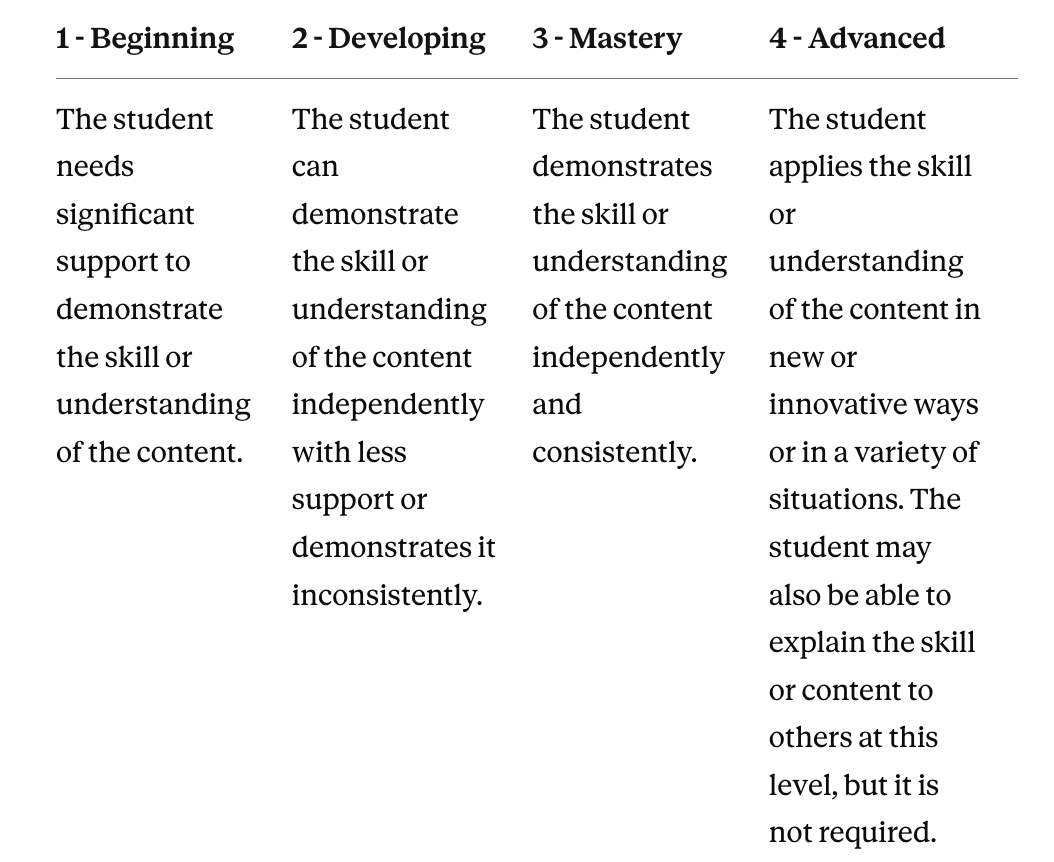
Student Agency: Encourages students to build self-regulation, monitor their own progress, and take an active voice in learning.
At AcademyACL, standards-based grading works through supporting standards that build toward mastery of "power," or overarching, standards, which are what appear on trimester learning reports. Power standards encompass all supporting standards for those skills at a particular level — for example, the 276 individual supporting standards for one writing standard in a level four language arts class. In Alma, assignments illustrate mastery of supporting standards, and it's common for students to show mastery on specific supporting standards yet not receive a mastery level score on their learning report in the first or second trimester.